





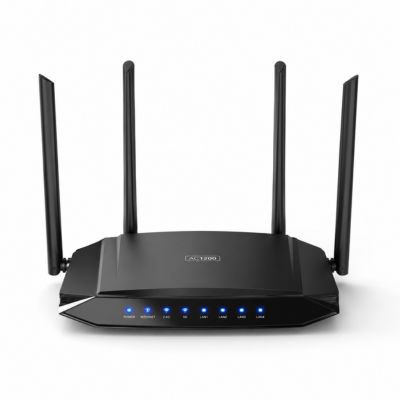
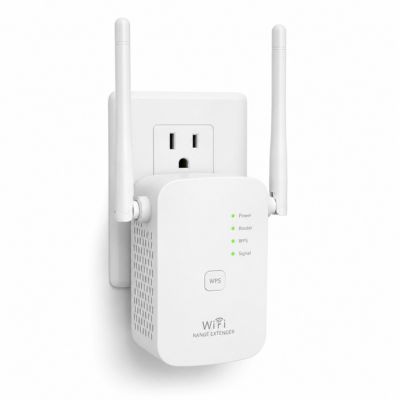
Data communication infrastructure depends entirely on high-grade routing and switching hardware to manage dense data packets without causing bottleneck drops or latency spikes. Low-quality network components frequently struggle under heavy multi-device environments, experiencing packet loss, thermal throttling, and wireless dead zones that severely disrupt home or office production. Deploying network equipment engineered with advanced processing cores ensures stable bandwidth distribution, secure local area network (LAN) structures, and uninterrupted wireless coverage across complex building layouts.
Advanced Signal Architecture & Beamforming: Wireless hardware utilizes multi-polarized external antennas, high-gain low-noise amplifiers, and explicit Beamforming technology to direct targeted radio waves directly toward connected clients, minimizing signal decay through dense walls.
High-Throughput Wireless Protocols: Modern routers implement dual-band and tri-band Wi-Fi standards along with Orthogonal Frequency-Division Multiple Access (OFDMA) and MU-MIMO technologies to manage dozens of simultaneous high-bandwidth streams without connection degradation.
Robust Hardware Processing & Thermal Layout: Core architectures incorporate multi-core network processors and high-capacity RAM modules paired with passive aluminum heatsinks to route heavy gigabit traffic smoothly while preventing internal thermal overload during continuous operation.
Secure Layer Network Protection: Internal firmware chips provide integrated firewall control structures, automatic hardware encryption standards (such as WPA3), and virtual local area network (VLAN) segregation to safeguard local data streams from external security threats.
To configure a reliable network architecture, evaluate your total workspace area, local physical barriers, and the number of active network nodes. Opt for mesh networking layouts to eliminate deep coverage blind spots in multi-story buildings, verify the physical Ethernet interfaces support Gigabit standards for fiber-optic lines, and choose devices with ample data processing power to handle your total bandwidth capacity. Selecting precise networking specifications maintains an efficient, secure, and drop-free digital workspace.